
To market a rental property effectively, you need to create an irresistible first impression. This isn't just about one thing; it's the combination of professional-quality visuals, a compelling story in your listing description, and a smart plan to get your property in front of the right people.
Build a Foundation with Unforgettable Visuals
Let's be honest: potential tenants don't read listings, they swipe through them. You have maybe a second, tops, to grab their attention. That initial hook is almost always visual.
Dark, grainy smartphone photos just don't work anymore. In today's market, professional media isn't a luxury—it's a basic requirement if you want to attract high-quality applicants and avoid the high cost of a vacant unit. Your goal is to tell a visual story that makes someone stop scrolling and start picturing their life in your space.
The Power of Professional Photography
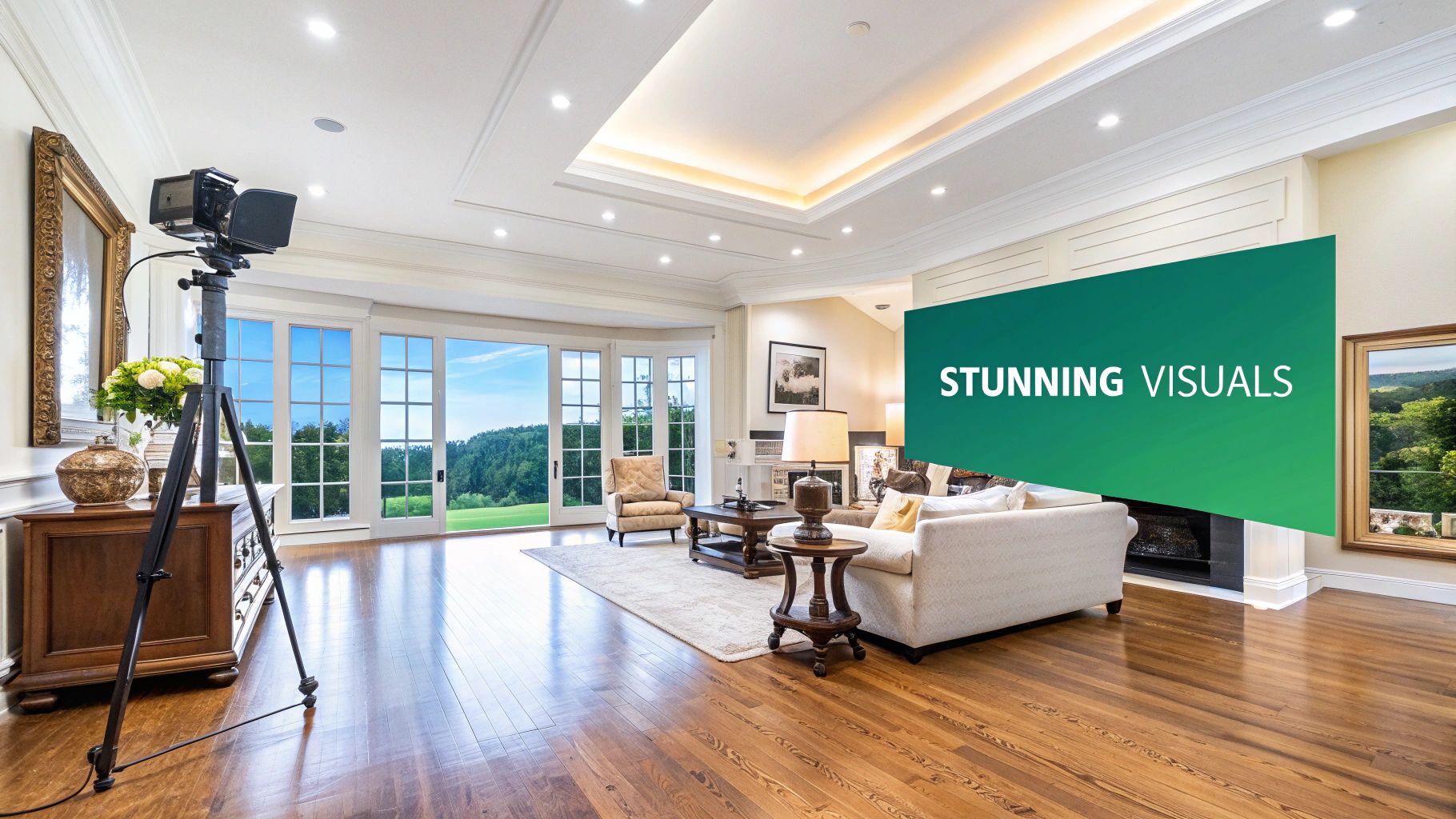
High-quality photos are the absolute cornerstone of your marketing. A professional photographer knows how to use light, composition, and the right angles to make rooms feel bright, spacious, and welcoming. They capture the little details that justify your asking rent, from the gleam on the countertops to the way sunlight fills the living room in the afternoon.
Think of it this way: your photos are your digital curb appeal. Bad photos scream neglect or a landlord who cuts corners. Crisp, professional images, on the other hand, convey quality and care right from the start. That first impression sets the tone for everything that follows. For those interested in the nitty-gritty of the equipment used, we put together a guide on essential gear for real estate photography.
Creating an Immersive Experience
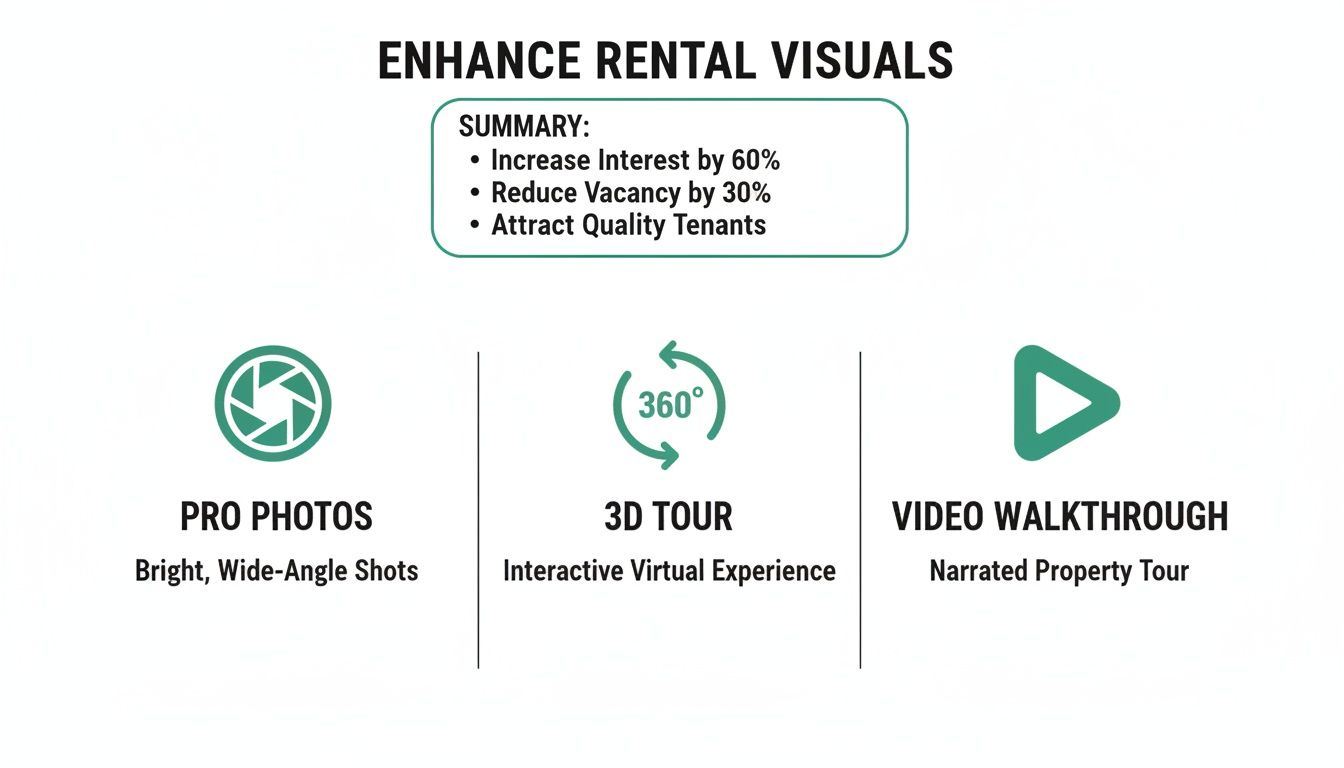
Static images are just the beginning. The best rental marketing today uses immersive media to give prospects a genuine feel for the space before they even book a showing. These tools are incredible for filtering out people who aren't a good fit and getting the right people excited.
Two formats are making the biggest impact:
- Video Walkthroughs: This is your guided, cinematic tour. Video captures the flow and feel of a home in a way photos can't. You can guide the viewer's eye to the best features, like that brand-new kitchen or the quiet balcony overlooking the park.
- 3D Virtual Tours: These give control to the user. They can "walk" through the property at their own pace, looking at every nook and cranny. This level of interaction builds serious confidence and transparency.
To help you decide what's right for your property, here's a quick breakdown of the different media types and what they're best for.
Essential Media Types for Rental Property Marketing
| Media Type | Primary Purpose | Best For Attracting... |
|---|---|---|
| Professional Photos | Grab initial attention and showcase key features. | All tenants; the foundational element of any listing. |
| Video Walkthroughs | Demonstrate the property's flow and lifestyle appeal. | Tenants who value atmosphere and a home's "feel." |
| 3D Virtual Tours | Provide an in-depth, self-guided exploration of the layout. | Out-of-town renters, busy professionals, and detail-oriented tenants. |
| Floor Plans | Give a clear, technical overview of space and dimensions. | Tenants focused on furniture placement and spatial planning. |
| Drone Photos/Video | Highlight location, property size, and neighborhood amenities. | Tenants interested in luxury properties, homes with large yards, or specific community features. |
By combining these elements, you create a robust visual package that answers questions before they're even asked, building trust and attracting serious inquiries.
Why Visual Investment Matters More Than Ever
The rental market is getting more competitive. Recent data shows that the average time a vacant apartment sits on the market has climbed to 36 days—the highest it's been for a February since 2019. That’s a 9% increase from last year, which means landlords have to work harder to make their properties stand out.
Think about the math. Investing in professional media isn't an expense; it's a direct strategy to cut down your vacancy period. If your rent is $2,000 per month, every week the unit sits empty costs you $500. A great photo and video package that costs less than that can easily pay for itself by getting it rented just one week faster.
Ultimately, stunning visuals do more than just get clicks. They pre-qualify your leads, justify your rent, and drastically reduce the number of low-interest showings you have to waste your time on. When you build this strong visual foundation, you’re setting yourself up for a faster, more profitable leasing process.
Write Rental Listings That Turn Clicks Into Calls
Your stunning photos get the initial glance, but it's your words that truly sell the property. A great listing description does more than just list features; it tells a compelling story about the lifestyle your rental offers. It’s the critical bridge that takes a potential tenant from casually browsing to actively booking a tour.
The secret is to stop writing about the property and start writing for your ideal tenant. Who are you trying to attract? A young professional who needs a short commute and loves being able to walk to a coffee shop? Or a growing family looking for a safe neighborhood with great schools? Every word you write should speak directly to their desires.
Craft a Headline That Demands a Click
Think about it: on a crowded portal like Zillow or Apartments.com, your headline is fighting for attention. A bland title like "2 Bed, 2 Bath Apartment for Rent" is invisible. You need to grab them by highlighting the single best thing about your property right up front.
This is what I call the "hero feature"—the one thing that makes your place stand out from the rest. It could be anything from a killer view to a brand-new kitchen.
Instead of this: 3 BR Home for Rent
Try this: Spacious 3BR with a Huge Fenced Yard, Perfect for Pets & Kids
Instead of this: Downtown Condo Available
Try this: Sun-Drenched Corner Condo with a Private Balcony & City Views
See the difference? The second versions immediately paint a picture and connect with a specific need. They give renters a real reason to click your listing instead of the ten others surrounding it.
Structure Your Description to Tell a Story
Once they've clicked, you have to deliver. Don't hit them with a wall of text. The best descriptions are easy to scan, using short paragraphs and clear sections to guide the reader through the home.
I’ve found this structure works wonders:
- The Opening Hook: Kick things off with a sentence that expands on your headline and gets them excited.
- A Guided Walkthrough: Take them on a virtual tour with your words. Describe the flow from the living room to the kitchen to the bedrooms. Focus on how the space feels and how it can be used.
- The Feature Breakdown: This is the perfect place for a bulleted list. Call out the best stuff—stainless steel appliances, in-unit laundry, hardwood floors, smart home tech. Bullets are your friend for scannable info.
- Selling the Neighborhood: Renters aren't just choosing a unit; they're choosing a lifestyle. Talk about the nearby parks, popular restaurants, and transit options. Help them imagine their life there.
- The Nuts and Bolts: End with the practical stuff. Clearly state the rent, deposit, and pet policy. Most importantly, give them a clear call to action on exactly how to schedule a showing or apply.
Your rental listing is more than just an ad—it’s the start of your relationship with a tenant. Be honest and upfront. Disclosing all mandatory fees isn't just good business, it's often the law. Hiding charges for trash service or package handling will only lead to distrust and potential legal headaches.
Weave in the Keywords Renters Actually Use
For your listing to get found, you have to think like a renter. What words and phrases are they typing into that search bar? Sprinkle these keywords naturally throughout your description.
Think about terms like:
- Pet-friendly apartment
- Luxury condo with gym
- Two-bedroom near [Local University]
- Townhome with attached garage
- Apartment with in-unit washer and dryer
By including these phrases, you're telling the listing platforms exactly who your property is for, which means they'll show it to more qualified leads. If you're looking for a shortcut, an AI-powered listing description generator can be a great tool for crafting a solid first draft. Mastering this simple optimization is a fundamental part of how to market rental properties and stand out in a competitive market.
Getting Your Price and Distribution Right
Let’s be honest: even with magazine-worthy photos and a description that sings, you’ll be hearing crickets if your price is off or nobody sees your listing. Nailing your rental price and getting it in front of the right people are the two pillars of a killer marketing plan. Get these right, and you’ll slash your vacancy time.
Pricing isn't a "set it and forget it" game or a wild guess. It's about hitting that sweet spot—the highest rent the market will bear without sending good tenants running for the hills. Aim too high, and the sound of silence will cost you more in lost rent than you ever hoped to gain. Go too low, and you're leaving cash on the table, month after month.
How to Price Your Rental Like a Pro
The secret is doing a quick and dirty comparative market analysis (CMA), just like real estate agents do for home sales. Your mission is to find a handful of recently rented properties in your neighborhood that are as close to a carbon copy of yours as possible.
These are your "comps," and you need to match them on the essentials:
- Bedrooms & Bathrooms: This is your starting point, the most basic filter.
- Square Footage: Compare apples to apples in terms of living space.
- Property Type: A single-family home isn't the same as a condo or a duplex. Their rental values differ.
- Amenities: Does your place have a slick new kitchen, a fenced yard, or in-unit laundry? Find comps with similar perks.
- Location, Location, Location: Stick to a half-mile radius and consider what's nearby—parks, public transit, and good schools all move the needle.
Once you have a few solid comps, you've got a baseline rent range. Now, you can adjust. Does your unit have a brand-new kitchen and a great view? You can probably push toward the top of that range. Is the carpet a bit dated and there's no dishwasher? You’ll need to price it more competitively to get people in the door.
Building Your Distribution Game Plan
With your price locked in, it’s time to shout it from the rooftops. Don't just throw your listing on one website and cross your fingers. A smart, multi-channel strategy is about meeting renters where they are, and sometimes the best leads come from the most unexpected places.
Here’s a breakdown of your primary channels:
| Channel Type | Examples | Best For |
|---|---|---|
| Major Listing Portals | Zillow, Apartments.com, Zumper | Casting the widest net to reach the most active renters. |
| Social Media | Facebook Marketplace, Local Groups | Targeting specific neighborhoods and community circles. |
| Hyper-Local Networks | Nextdoor, Corporate Housing Sites | Connecting with neighbors and niche renters, like traveling pros. |
| Paid Advertising | Facebook Ads, Instagram Ads | Reaching a highly targeted audience that isn't actively searching yet. |
The rookie mistake is stopping at the major portals. Sure, they bring in volume, but a post in a "Downtown Neighbors" Facebook group or on a network for traveling nurses can connect you directly with a highly qualified tenant who is a perfect fit.
The Untapped Power of Social and Niche Sites
Think beyond your personal Facebook feed. Join local rental groups and community forums where people are constantly asking for housing recommendations. When you share your listing there, it comes across less like a sterile ad and more like a helpful tip from a local.
You can also get surgical with paid social media ads. For as little as $50-$100, you can target users based on their location, interests, or even life events like "recently moved." This puts your amazing property photos in front of thousands of ideal tenants in your area who might not be scrolling Zillow every single day. It’s a proactive approach that separates the pros from the amateurs.
One crucial piece of advice: Be completely transparent with your pricing. Advertising a base rent only to spring mandatory "trash service" or "tech package" fees on applicants later is a fast track to legal headaches and starts the landlord-tenant relationship off on the wrong foot. Always disclose the full monthly cost upfront.
By combining a data-driven price with a broad, targeted distribution plan, you build a marketing engine that doesn't just find a tenant—it finds the right tenant, and it does it faster.
Conduct Showings That Secure a Signed Lease
This is it. The showing is your final pitch—the moment a potential renter stops looking at pictures and starts imagining their life in the space. All your hard work on photos, descriptions, and listings leads to this moment. A great showing isn't just about unlocking a door; it's about creating a professional and welcoming experience that makes signing the lease feel like the most natural next step.
First things first, let's talk logistics. The endless back-and-forth of scheduling can be a massive time sink. This is where modern tools are a lifesaver. Using a platform like Calendly or the scheduling feature in your property management software lets prospects book a time that works for them right from the listing. It cuts out the email tag and makes you look incredibly organized from the get-go.
What if the property is still occupied? This requires a delicate touch. Legally, you need to give at least 24 hours' notice, but I’ve found that giving even more notice and framing it as a partnership works wonders. A happy, cooperative tenant can be your biggest ally during a showing. A disgruntled one? They can kill the deal before you even walk in the door.
Setting the Stage for Success
Once a showing is on the books, your goal is to make the property absolutely shine. You don't need to hire a professional stager, but a little prep goes a long, long way. You're aiming for a clean, bright, and neutral canvas that lets people see the potential.
Before anyone walks through the door, run through this quick checklist:
- Let There Be Light: Open every blind and pull back every curtain. Flip on every single light—yes, even in the closets. Bright spaces feel bigger, cleaner, and more welcoming.
- Temperature Check: Make sure the thermostat is set to a comfortable temperature. Walking into a stuffy, hot apartment or a freezing cold one is an instant mood-killer.
- The Cleanliness Factor: The property has to be spotless. Pay extra attention to the kitchen and bathrooms. Wipe down every counter, scrub the sinks, and make sure there are no weird smells.
- Create Breathing Room: If the unit is furnished, get rid of as much clutter as you can. Tidy, open spaces help prospects mentally place their own furniture and feel right at home.
Mastering the Virtual Showing
For prospects who are out-of-town or just have a packed schedule, a live virtual showing can be a game-changer. But be warned: a shaky, dark video call is worse than no showing at all. A polished virtual tour requires a bit of planning. For a deep dive, check out our guide for creating a compelling video walkthrough of your property.
To pull it off, have a game plan. I always start outside to show the curb appeal and entryway, then move through the property logically, just like an in-person tour. A simple phone gimbal will give you smooth, stable video, and make sure you've got a solid internet connection before you start. As you walk, narrate what you're showing them and be ready to answer questions on the fly.
It’s also crucial to highlight what renters actually care about. For example, over 40% of renters are specifically looking for pet-friendly places. At the same time, 40% of renters list affordability as a top priority, and we've seen a 20% jump in searches for energy-efficient units. You have to speak to these needs. Find out more about how tenant priorities are shaping the rental market.
The Follow-Up Is Everything
Your job isn't done when you lock the door. A quick, professional follow-up can be the exact nudge a great applicant needs to hit "submit" on their application. Don't just wait for them to get back to you.
Within a few hours of the showing, send a short thank-you email. Mention a key feature or two that you talked about and, most importantly, include a direct link to the online application. This one simple step shows you're on top of things and makes it dead simple for them to take the next step. It closes the loop and gets that lease signed faster.
Zero In on Niche Renters and High-End Markets

Casting a wide net might fill a vacancy, but a targeted strategy is what unlocks premium rental income. To really push your returns, you have to move away from a "one-size-fits-all" mindset and create a focused campaign that speaks directly to a specific kind of renter. This is about identifying a niche and tailoring every single piece of your marketing—from the words you choose to the features you highlight—to grab their attention.
This approach is exactly how you justify higher rental rates. When a potential tenant sees your property as the perfect solution for their unique situation, not just another option, the price becomes much less of an issue.
How to Attract the Luxury Market
Landing high-end tenants is more art than science. This group values quality, convenience, and a certain lifestyle, and your marketing absolutely has to mirror that. Generic descriptions and standard photos just won't fly; you're selling an experience, an aura of exclusivity and sophistication.
It starts with your language. Ditch the common real estate jargon and choose more evocative words:
- Instead of: Nice kitchen with new appliances
- Try: A chef-inspired gourmet kitchen featuring integrated Viking appliances and quartz waterfall countertops.
See the difference? This subtle shift signals quality and an obsessive attention to detail. Your visuals need to be just as impeccable. We’re talking high-end architectural photography, not just your standard MLS shots. These images are meant to capture the design, the materials, and the unique feel of the space, making the premium price tag feel earned.
And make no mistake, the luxury rental market is booming. In some major cities, it's not just surviving; it's thriving. For instance, Manhattan luxury apartments recently saw rental prices jump by 9%, hitting a new record of over $100 per square foot. This trend highlights the huge opportunity for landlords who understand how to connect with this market. You can dive deeper into recent renter marketing statistics to get a better handle on this valuable group.
Finding and Winning Over Your Niche
Beyond the broad "luxury" category, there are plenty of valuable, and often overlooked, renter niches. These groups have very specific needs. If your property meets them, you can command higher rents and secure longer, more stable tenancies. The first step is to figure out what those opportunities look like in your area.
Look around for the economic drivers in your town. Is there a big hospital nearby? A major corporate campus? A university that brings in visiting professors? These are all breadcrumbs leading you to a potential niche.
By catering to a specific audience, you transform your property from a commodity into a specialized service. A traveling nurse isn't just looking for an apartment; they're looking for a hassle-free, fully furnished temporary home. Your ability to provide that solution is worth a premium.
Fine-Tuning Your Marketing for Specific Niches
Once you've identified your target niche, you need to adjust your marketing to speak their language. Each group has a different set of priorities, and your listing needs to address them directly.
For Traveling Nurses and Medical Professionals:
These renters are all about convenience and flexibility.
- Highlight: Proximity to medical centers ("Just a 5-minute drive to St. Luke's Hospital!").
- Promote: Flexible, short-term lease options (think 3- or 6-month leases).
- Offer: A fully furnished unit with all utilities included for a turnkey experience. This is a game-changer for them.
For Corporate Relocations:
Here, the company is often paying the bill, which means they're less sensitive about price and more focused on quality and simplicity.
- Mention: Your property's close proximity to major business parks or corporate headquarters.
- Showcase: Amenities that support a professional lifestyle, like a dedicated home office space, blazing-fast internet, or an on-site gym.
- Emphasize: Easy access to major highways or public transit for a stress-free commute.
For University Students or Faculty:
This is a reliable, seasonal market with predictable needs.
- Target: Use very specific keywords like "apartment near [University Name]."
- Feature: A layout that’s great for studying, like bedrooms of equal size or a quiet study nook.
- Communicate: The property's walkability to campus or its location on a direct university bus route.
By tailoring your marketing this precisely, you stop wasting time on unqualified leads. You start attracting applicants who are not only willing to pay what you're asking but are also more likely to be fantastic, long-term tenants. This is how you go from just filling vacancies to strategically building a high-performing rental portfolio.
Common Questions About Marketing Rental Properties
When you’re trying to get a property leased quickly and for the best price, you’re bound to have questions. I get it. Let’s walk through some of the most common things landlords and property managers ask when it's time to market a rental.
How Much Should I Spend on Marketing My Rental Property?
There isn’t a one-size-fits-all answer here, but I always tell people to think of marketing as an investment against vacancy. Your single most important, non-negotiable expense will be professional media. This could cost anywhere from a few hundred dollars to over a thousand, depending on your property's size and what you need—photos, a video walkthrough, a 3D tour, etc.
Here’s the reality: the income you lose from just one month of vacancy almost always dwarfs a smart marketing budget.
Beyond the visuals, you might consider paying for a premium spot on the major listing sites or running a small, targeted social media ad campaign for $50-$100. The goal isn't to be cheap; it's to be strategic and fill that vacancy fast.
When Is the Best Time of Year to List a Rental Property?
The rental market has a very predictable rhythm. The peak season generally runs from May through August when the weather is nice, kids are out of school, and new grads are starting jobs. If you list your property during this window, you’ll likely see a much bigger pool of applicants and get it rented faster.
On the flip side, things typically cool off from November to February. If you find yourself with a vacancy during the off-season, your marketing simply has to be top-notch.
You might have to get more competitive with your rent or offer a small incentive to stand out. But I've found that with incredible photos and a well-written listing, you can still land a fantastic tenant no matter what the calendar says.
What Are the Most Common Mistakes to Avoid When Marketing a Rental?
So many landlords make the same handful of mistakes that end up costing them dearly in vacancy time. Just by sidestepping these common blunders, you’ll be way ahead of the game.
- Bad Photos: This is, without a doubt, the biggest mistake I see. Dark, blurry, or cluttered pictures taken on a phone are a huge turn-off. They immediately signal to a potential renter that the property might not be well-cared-for.
- Boring Descriptions: A listing that just rattles off facts ("3 bed, 2 bath") does nothing to sell the lifestyle. You have to paint a picture and highlight what makes your property a great place to live.
- Slow Response Times: In a hot market, the best tenants don't wait around. If you don't respond to an inquiry within a few hours, you've probably already lost that applicant to another property.
- Wrong Pricing: This is a two-way street. Price it too high, and you're looking at a long, expensive vacancy. Price it too low, and you’re leaving money on the table month after month.
One of the most critical legal and ethical mistakes is advertising a rental price that excludes mandatory fees. Disclosing the total monthly cost upfront isn't just good practice; it's the law. Hidden charges for services like trash pickup or package handling can lead to serious legal trouble and destroy trust with your new tenant from day one.
Focus on getting high-quality visuals, writing compelling copy, being incredibly responsive, and using real data to set your price. If you can do that, you'll not only avoid these pitfalls but also create a marketing process that keeps your properties filled with qualified tenants.
Ready to create stunning visuals that get your rental noticed and leased faster? PropPhoto connects you with vetted, professional real estate photographers in your area who specialize in making properties shine. Find the perfect photographer and book your shoot today.

