
So, you're trying to nail down how much a photographer really costs per hour. It's one of the first questions everyone asks, but the answer isn't always straightforward. While you'll see rates anywhere from $50 to $250 per hour, that number is just the tip of the iceberg, especially in the world of real estate photography where packages are king.
What Is the Average Hourly Rate for a Photographer
Let's start with a solid benchmark to get our bearings. When a photographer quotes an hourly rate, it’s not just for the time they spend with a camera in hand. That single figure bundles everything together: the drive to the property, setting up equipment, the actual shoot, and—most importantly—the hours of post-production work that make your photos shine.
If we look at nationwide salary data, the average rate for a property photographer in the U.S. lands at about $20.36 per hour. That number can be a bit misleading, though. Most photographers actually fall within a more realistic range of $15.38 to $21.63 per hour.
This is where location becomes a huge factor. A photographer in a hot market like San Jose, California might average over $25.00 an hour because the cost of living—and the stakes of the real estate game—are much higher. You can dig into more of the regional pricing details in this property photographer salary research.
An hourly rate is just a building block, not the final quote. Think of it like the price of a gallon of paint. The final cost to paint a room depends on how big it is, how much prep work is needed, and if you want an accent wall. The paint is just one part of the puzzle.
To make things clearer, let's break down photographers into a few experience tiers. This helps you understand what you're getting for your money and match the right pro to your specific needs.
Photographer Hourly Rate Tiers at a Glance
The table below gives you a quick snapshot of what to expect at different price points, from a newcomer just starting out to a seasoned expert with a full suite of services.
| Experience Level | Typical Hourly Rate Range | Common Services Included |
|---|---|---|
| Beginner/Student | $25 - $75 | Basic on-site shooting with minimal post-processing. A solid choice for straightforward jobs on a tight budget. |
| Intermediate | $75 - $150 | Professional gear, standard HDR editing, and reliable turnaround times. The go-to for most standard listings. |
| Expert/Specialist | $150 - $300+ | Advanced techniques (flambient, twilight), add-ons like drone or 3D tours, and premium, magazine-quality editing. |
Ultimately, this tiered structure shows that you're paying for more than just photos—you're investing in a level of skill, reliability, and artistry that matches the quality of the property you're trying to sell.
What Really Goes Into a Photographer's Hourly Rate?
Ever wonder why one photographer quotes you $50 an hour while the next one comes in at $200? It’s not random. A professional photographer’s rate is a carefully considered number, built on a foundation of specific, tangible factors. It’s a lot like pricing a home—you can't just look at the square footage; you have to consider the location, the finishes, and the overall quality.
Let's break down the key ingredients that make up that final number, so you can understand exactly what you're paying for.
Experience and Skill Level
This is the big one. A photographer's experience level is probably the single most important factor driving their price. You're not just paying for someone to push a button; you're investing in their eye, their technical mastery, and their ability to solve problems on the spot.
A seasoned pro with a decade of experience shooting architecture brings a whole different game to the table. They see light and angles in a way a newcomer simply can't.
- The Newcomer: A photographer just starting out will likely have a lower rate because they're focused on building their portfolio. Their work can be good for basic shoots, but it might not have that "wow" factor or the consistent, polished look of a veteran's.
- The Seasoned Pro: An expert charges more because they deliver results that move the needle. They produce magazine-quality images that don't just show a property—they sell a lifestyle. That skill is a direct investment in your listing's performance.
This difference in expertise is why you see such a wide range in pricing. For a deeper dive into what it takes to reach that pro level, check out our guide on how to become a real estate photographer.
Location and Market Demand
Geography matters. A lot. A photographer working in downtown San Francisco or Manhattan has a radically different cost of doing business than someone in a small Midwestern town.
Higher overhead costs like rent, insurance, and even just getting around the city get baked into their rates. On top of that, major real estate markets are fiercely competitive, which drives up demand for high-end photography. When demand is high, the best photographers can—and should—charge a premium for their time and talent.
Scope and Complexity of the Job
No two photoshoots are the same. A quick, standard shoot for a 1,500-square-foot condo is a world away from a multi-hour twilight session at a sprawling luxury estate. The complexity of the job has a direct impact on the price.
Remember, a photographer's rate doesn't just cover the hour they're on-site. It includes all the unseen work: planning, travel, gear prep, the shoot itself, and then hours of meticulous editing to make every image perfect.
Think about these common variables that add complexity and cost:
- Specialized Services: Things like aerial drone shots, immersive 3D Matterport tours, or cinematic video walkthroughs require expensive gear, special certifications, and a whole other set of skills.
- Lighting Challenges: Capturing that perfect "golden hour" glow at twilight isn't easy. It takes precise timing and advanced lighting techniques to pull off, which naturally justifies a higher rate.
Deliverables and Licensing Rights
Finally, what you actually get after the shoot—and what you're allowed to do with it—is a huge part of the price. The final images are the deliverables, and your permission to use them is called licensing. This is a crucial, often overlooked detail.
A basic package might give you a set of web-ready photos for the MLS with a simple, limited-use license. A more comprehensive package could include high-resolution files perfect for print ads, brochures, and billboards, along with broader commercial rights. The more freedom you have to use the images, the more valuable they are—and the price will reflect that.
How Rates Change by Photography Specialization
A photographer's hourly rate isn't a flat fee that applies to every job. Think of it like hiring a skilled tradesperson—the cost for a master electrician to rewire a historic home is going to be different from a painter giving a room a fresh coat. The same principle applies here; the price shifts based on the specific skills, gear, and complexity the job demands.
A standard interior and exterior photoshoot is the bread and butter of real estate photography. It’s the most common request, which means pricing is often very competitive. For a seasoned pro, the process is second nature, allowing them to be incredibly efficient both on-site and during the editing phase.
Premium Services Command Higher Rates
Once you start looking beyond standard photos, you get into specialized services that require a lot more than just a good camera. These add-ons demand unique expertise, expensive technology, and significantly more time in post-production, all of which gets factored into the final cost.
Take aerial drone photography, for instance. It's not as simple as sending a toy up in the air. A professional drone pilot needs to be FAA certified, which means passing exams and staying current on regulations. They’re flying thousands of dollars worth of equipment and carry specialized liability insurance. That investment in certification, gear, and flight skill is why a drone session naturally costs more per hour than a shoot on the ground.
The key thing to remember is that you aren't just paying for a different kind of photo. You're paying for a photographer's investment in specialized training, high-end equipment, and the years it took to master that distinct craft.
Other premium services have their own unique cost structures for similar reasons.
- Twilight Photography: Nailing that perfect "golden hour" shot is an art form. It requires impeccable timing and often involves complex lighting setups to balance the dimming ambient light with the home’s interior glow. That very narrow window of opportunity and technical challenge bumps up the price.
- 3D Virtual Tours: Creating a Matterport tour isn't a quick point-and-shoot job. The photographer has to meticulously scan every single room from multiple angles using a special camera, then process all that data to build the immersive, seamless experience you see online. This is a time-intensive process, both at the property and back at the office.
- Video Walkthroughs: A high-quality property video is a mini film production. It involves planning shots, capturing smooth footage, recording clear audio, licensing music, and then spending hours editing it all together into a compelling story. The post-production lift for video is substantially greater than for still images.
Understanding the Numbers in Practice
So, how does this all translate to real-world costs? In most major U.S. markets, you can expect real estate photographers to charge somewhere between $50 to $150 per hour. This range covers their time for everything from a basic shoot to more involved work like drone flights or detailed editing.
For a luxury property, a photographer might spend 2-4 hours on-site and in post-production. Based on that hourly range, you’re looking at a project fee of around $200-$600.
Ultimately, knowing why these differences exist is crucial for setting the right budget. For a much deeper dive into how all these factors are bundled into packages, check out our guide on how to price real estate photography.
Comparing Photography Prices Across The Country
Location, location, location. That old real estate mantra doesn't just apply to property values—it's a huge factor in what a photographer charges. Just like a one-bedroom apartment in Manhattan costs a whole lot more than a similar place in Omaha, a photographer's rates are tied directly to geography.
The cost of living, market demand, and even the local real estate climate create massive price differences from one city to the next. If you book the exact same photo package in two different regions, you could get quotes that are literally double or more. Understanding this is the first step to setting a realistic budget.
Major Metro Versus Smaller Markets
Big cities are a different ballgame. They're hubs of competition with high property values, and that reality is baked right into a photographer's pricing. You’ll see that some of the biggest drivers behind hourly rates are these geographic gaps, with major U.S. cities easily commanding premium prices.
For instance, a photographer in San Francisco might pull in around $23.96/hour, while someone in the sprawling Los Angeles market could hit $24.93/hour. Jump over to New York City, and a standard per-shoot fee of $295 often translates to an effective hourly rate between $75 and $100. This creates a pretty significant pay difference between coastal hubs and heartland cities, where rates tend to be lower.
To get a quick visual on how this breaks down for different services, check out this chart. It gives you a great baseline for what to expect.
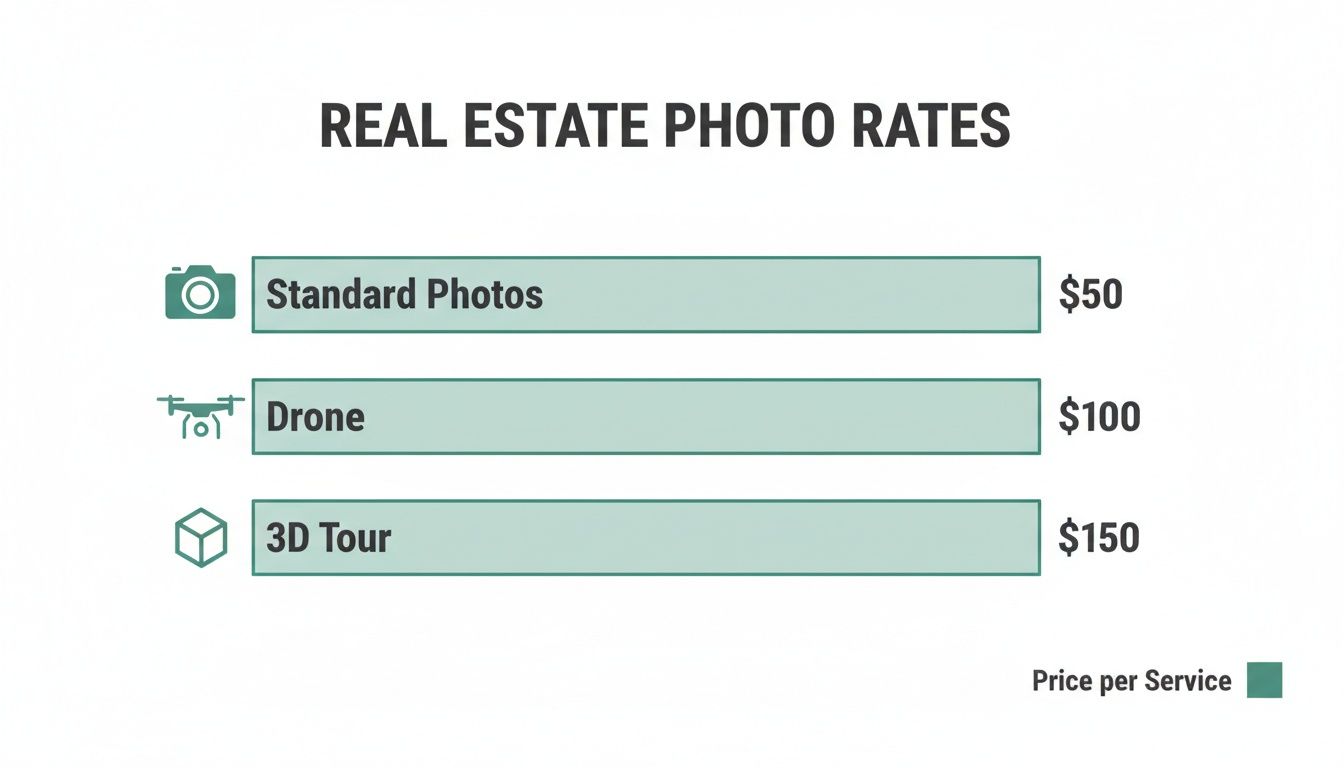
As you can see, adding on specialized services like drone work or a 3D tour represents a real step up in investment compared to standard photos.
To put this all in perspective, here's a look at how standard package costs can vary across a few major U.S. cities.
Sample Real Estate Photography Costs in Major US Cities
| City | Average Cost Per Standard Shoot | Estimated Equivalent Hourly Rate |
|---|---|---|
| New York, NY | $295 - $500 | $75 - $125 |
| Los Angeles, CA | $250 - $450 | $60 - $110 |
| Chicago, IL | $200 - $375 | $50 - $95 |
| Houston, TX | $175 - $325 | $45 - $80 |
| Miami, FL | $225 - $400 | $55 - $100 |
Keep in mind these are just averages. The final price tag will always depend on the specific property, the photographer's experience, and the package you choose. But it gives you a solid idea of the regional price differences you'll encounter.
The bottom line is simple: your location sets the stage for photography pricing. A budget that feels generous in one market might be considered entry-level in another.
Knowing these regional economic realities helps you make smarter hiring decisions. If you're curious about how these rates all add up for the photographers themselves, you might find our article on how much real estate photographers make insightful. Whether you’re an agent budgeting for a new listing or a photographer trying to set your own prices, context is everything.
Moving From Hourly Rates to Complete Project Packages
While knowing a photographer's hourly rate is a good starting point, it rarely paints the whole picture. In fact, most seasoned real estate photographers have ditched the hourly model altogether. Why? Because quoting by the hour often creates confusion and doesn't really capture the full value of their work. Instead, they bundle everything into clear, all-inclusive project packages.
This package-based approach is just better for everyone. As an agent, you get a firm, final price right from the start—no hidden fees, no surprise invoices. And for the photographer, it means they’re fairly compensated for the entire job, not just the time they spend with a camera in their hands.
Building a Package From an Hourly Rate
So how does a photographer actually build a package price? It all starts with their hourly rate, which they use as the core building block for the final cost.
Let’s break it down with a simple, real-world scenario. Say a photographer has determined their time, skill, and business costs are worth $100 per hour. They're shooting a standard 2,500-square-foot home and map out the time investment like this:
- 1.5 hours for driving to the property, setting up, and shooting.
- 2 hours for all the behind-the-scenes magic: sorting through hundreds of photos, editing the best shots, color correcting, and preparing the final files.
Based on time alone, we’re looking at 3.5 hours x $100/hour, which comes out to $350. This number is the foundation of the package. It’s the baseline cost to cover their expert labor from the moment they leave their office to the moment they deliver the final images.
A project package isn't just a number pulled out of thin air. It's a carefully calculated price that starts with the photographer's hourly value and methodically adds in everything needed to produce a professional, market-ready final product.
From that $350 base, the photographer then layers on the other essential costs of running a professional business. This isn't about padding the bill; it's about being transparent and ensuring every part of the service is accounted for.
Adding Essential Costs to Finalize the Price
The time calculation is just step one. To arrive at the final package price you see on a menu, several other critical costs have to be factored in. These aren't "extras"—they're fundamental components of delivering high-quality real estate media.
A professional photographer’s price will always account for:
- Gear and Software Costs: That pro-level camera, those sharp lenses, the powerful lighting equipment, and subscriptions to software like Adobe Lightroom all come with a hefty price tag. A small piece of that investment is built into every shoot.
- Travel and Vehicle Expenses: This covers the real costs of getting to and from the property, including gas, mileage, and wear and tear on their vehicle.
- Image Licensing: The fee includes the specific rights for you, the agent, to use the photos to market and sell the listing.
- Business Overhead: This is the nuts and bolts of running a legitimate business—things like liability insurance, marketing, taxes, and software for scheduling and delivery.
Once the photographer adds these costs to their $350 time-based figure, they might land on a final package price of $425. This transparent, project-based model is so much clearer than a running clock, giving you a predictable investment and a true sense of the comprehensive value you’re receiving.
How to Hire the Right Photographer for Your Budget

Finding a great photographer isn’t about chasing the lowest hourly rate. It's about finding the best value—the kind of quality that makes your listing pop and gets buyers through the door. Hiring with confidence means having a clear plan from the start, so the pro you choose is a perfect match for your goals and budget.
First things first, define what you actually need. Are we talking about a standard set of 25 crisp photos for a starter home? Or does this luxury listing call for the whole nine yards—a 3D tour, drone shots, and a cinematic video? The clearer your vision, the more accurate the quotes will be.
Vet Your Candidates Thoroughly
Once you know what you're looking for, it’s time to dive into portfolios. You're not just looking for pretty pictures; you're looking for consistency and a style that clicks with your brand and the home's personality. Someone who excels at bright, airy farmhouse interiors might not be the right choice for a dramatic, modern home with sharp angles.
When you've shortlisted a few contenders, it's time to do a little homework.
- Check their credentials: Do they have a professional website? What are past clients saying in reviews? Most importantly, can they show you a portfolio packed with real estate work?
- Get a detailed quote: A true professional won't just give you a single number. They'll provide a clear breakdown of costs, what's included, and how quickly you'll get your files.
- Talk about licensing: This is a big one. You need to know exactly where and how you can use the photos. Confirm you have the rights to use them on the MLS, social media, your website, and in print without any future headaches.
Your best friend in this process is a detailed project brief. Include the property address, square footage, the exact services you need (photos, video, drone, etc.), and your ideal timeline. This simple step removes the guesswork and helps photographers give you a firm, accurate proposal.
Finalize the Agreement
Before you say "yes," read the contract. Every last word of it. It should spell out all the details you've discussed, from the scope of work and payment schedule to the cancellation policy and how the final images will be delivered. A solid contract protects both of you and paves the way for a smooth, successful partnership.
Platforms built for this purpose can make your life a whole lot easier. For example, PropPhoto lets you browse local photographers who have already been vetted, compare their transparent pricing, and book everything in one spot. It helps you find more than just a camera for hire—it connects you with a creative partner dedicated to making your listings shine.
Answering Your Lingering Questions
Even with all the numbers laid out, a few common questions always pop up when agents are ready to hire a photographer. Let's tackle them head-on so you can move forward with confidence.
Is It Better to Pay Per Hour or Per Project?
When it comes to real estate, paying per project or per package is almost always the way to go. It just makes more sense for everyone involved. This approach gives you a firm, predictable cost right from the start, so there are no billing surprises when the invoice arrives.
You know exactly what you're paying for—say, 25 professionally edited photos and a detailed floor plan for one set price. Hourly billing is much more common for things like weddings or corporate events where the photographer can't predict how long they'll be needed. With a package, the focus stays where it should be: on getting you incredible marketing materials, not on watching the clock.
How Much Should I Actually Budget for a Standard Listing?
For a typical home, you can expect to budget somewhere between $175 and $400 for a high-quality photo package covering both the interior and exterior. Where you land in that range will depend on your local market and the photographer’s experience.
Keep in mind, that's your baseline. If you're listing a high-end property or want to add premium services like drone photography, a twilight shoot, or a cinematic video tour, your investment will be higher. Those more comprehensive packages can easily run from $500 to over $1,000.
What Am I Really Paying For in That Rate?
A photographer's rate—whether it's hourly or part of a package—covers so much more than just the time they spend on site. It’s an all-in price that reflects the entire professional process needed to create images that stop scrollers in their tracks.
That single number bundles everything together:
- The initial consultation and scheduling.
- Travel time to and from the property.
- The actual time spent shooting on location.
- The hours of meticulous post-production work, including editing, color correction, and final touch-ups.
It's easy to forget that the rate also has to cover the photographer's business overhead. We're talking about thousands of dollars in cameras and lenses, specialized software subscriptions, liability insurance, marketing costs, and ongoing training. You’re not just paying for pictures; you're investing in a complete, professional service.
Ready to find the perfect photographer for your next listing without the guesswork? With PropPhoto, you can browse vetted local professionals, compare their transparent package pricing, and book with confidence. Find your next real estate photographer on propphoto.com and get visuals that sell.

