
When you think of real estate photography, you might picture a cozy living room or a sunny backyard. But commercial real estate photography is a completely different ballgame. It's less about selling a lifestyle and all about selling business opportunity and scale.
This isn't just about taking pretty pictures. It’s the strategic art of capturing a property's true value, its functionality, and its raw investment potential. For agents, developers, and property managers, these images are one of the most powerful tools in their marketing arsenal.
Why Commercial Real Estate Photography Is a Marketing Powerhouse
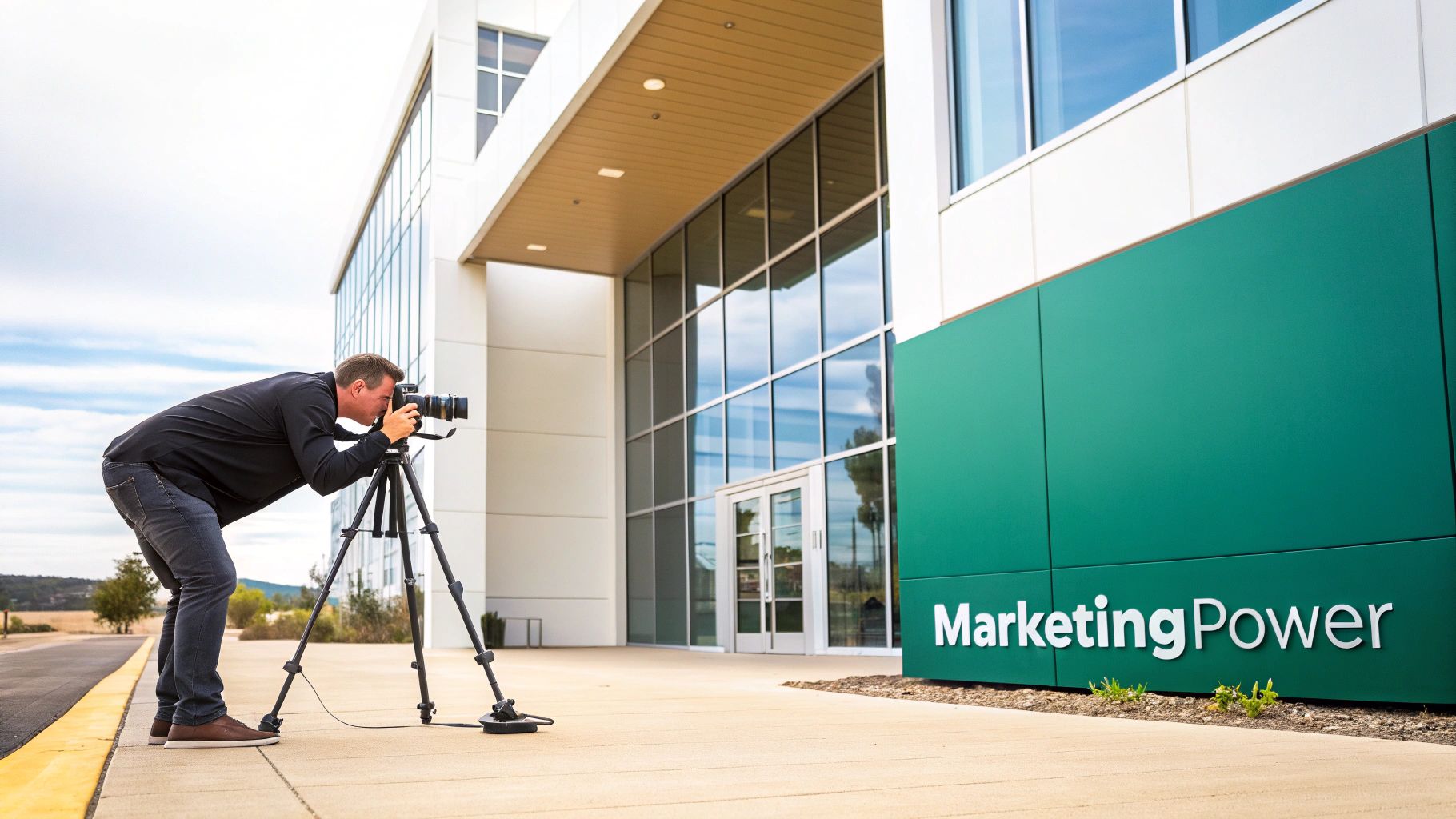
Think of it this way: professional photos are your property’s first interview with a potential tenant or investor. Before anyone ever schedules a tour or steps foot on-site, they’re scrolling through listings online. What they see in those first few seconds will either grab their attention or send them clicking away to a competitor.
High-quality commercial photography isn't a luxury anymore; it’s a non-negotiable part of a winning marketing plan.
And the numbers back this up. Listings with professional photos don't just look better—they perform better. Properties with top-tier images have been shown to sell 32% faster than those without. In a competitive market where holding costs can eat into your bottom line, that kind of speed is a game-changer. The right visuals do more than just show a space; they tell a story of potential and profitability.
The Critical Difference From Residential Photography
While both fields use a camera, their missions couldn't be more different. Residential photography is all about emotion. The goal is to help a potential buyer imagine their family living in the home, creating a feeling of warmth and personal connection.
Commercial photography, on the other hand, is driven by logic and pragmatism. It needs to answer critical business questions visually. Can our logistics team operate in this warehouse? Does this office space support a collaborative workflow? How much foot traffic will this retail storefront get? The focus shifts from "cozy" to functionality, return on investment, and logistical advantages.
To put it plainly, the end goals are worlds apart. Here's a quick look at the main distinctions.
Commercial vs Residential Photography At a Glance
| Aspect | Commercial Photography | Residential Photography |
|---|---|---|
| Primary Goal | Showcase ROI, functionality, and business potential. | Evoke an emotional connection and sell a lifestyle. |
| Target Audience | Business owners, investors, facility managers. | Families, individuals, homebuyers. |
| Key Focus | Space, scale, logistics, location, and infrastructure. | Ambiance, comfort, charm, and personal appeal. |
| Typical Shots | Wide shots showing scale, detailed utility photos, aerials. | Cozy interior vignettes, lifestyle shots, curb appeal. |
| Overall Tone | Professional, clean, and objective. | Warm, inviting, and aspirational. |
Understanding this split is key to creating images that actually work for a commercial audience.
A great residential photo says, "You could be happy here." A great commercial photo says, "Your business could be successful here." This distinction drives every creative and technical decision.
Who Benefits From Professional Imagery
Strong visuals ripple across the entire commercial real estate ecosystem. Just about every stakeholder has something to gain from compelling, professional photography.
- Brokers and Agents: Use knockout images to win more listings and attract qualified leads, ultimately closing deals faster.
- Property Developers: Need high-end photography to showcase the quality and vision behind new projects, attracting investors and first-wave tenants.
- Property Managers: Rely on compelling visuals to market vacant units, cutting down on downtime and keeping occupancy rates high.
- Investors: Get crucial, accurate insights from detailed photos, which is especially important for making confident decisions on out-of-state properties.
At the end of the day, exceptional commercial real estate photography acts as your silent salesperson. It works 24/7 to communicate value, answer questions, and drive action—an investment that pays for itself over and over again.
The Key Photography Services Every Commercial Property Needs
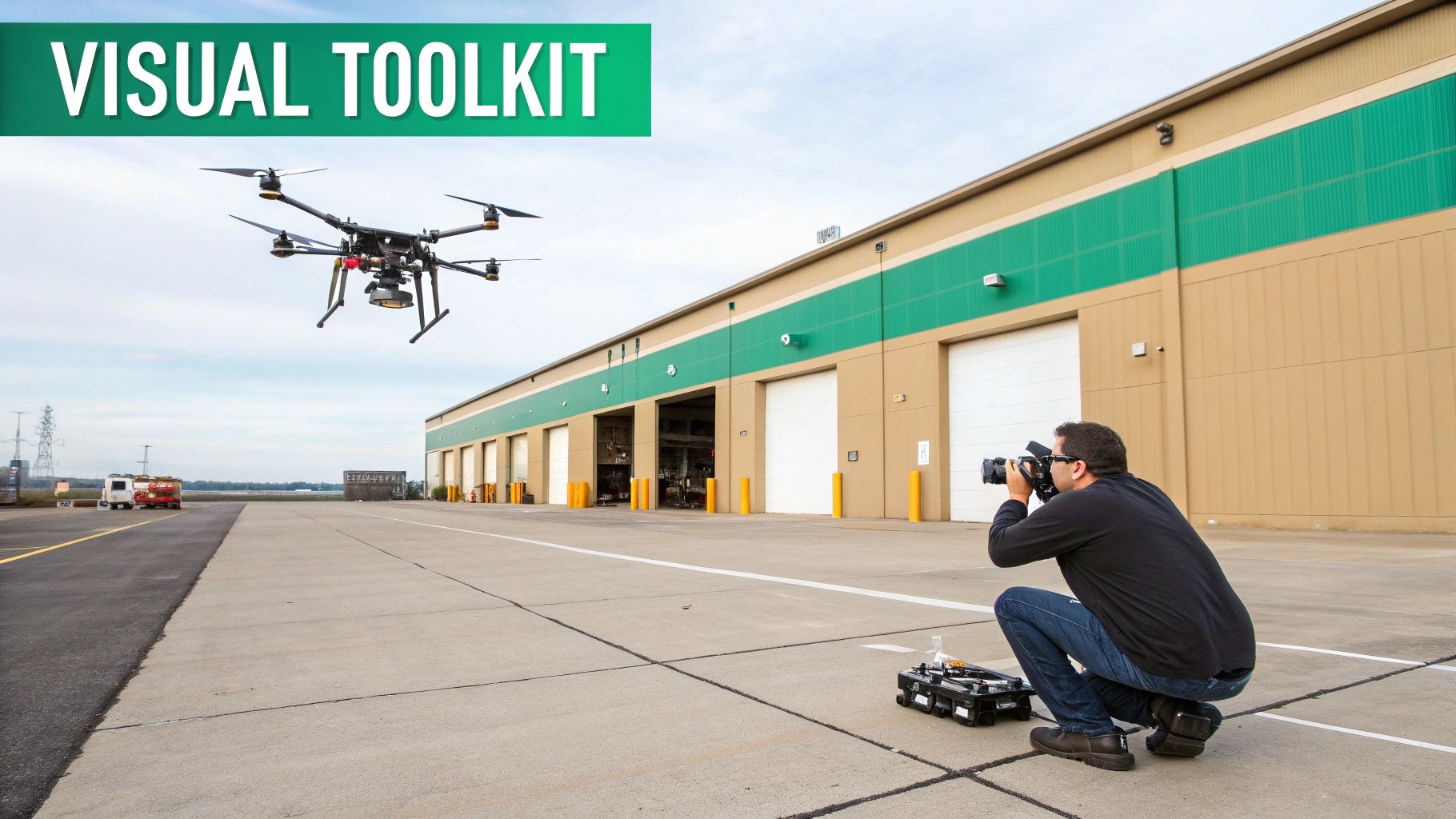
A great commercial real estate photography package isn't just a collection of nice pictures. It’s a complete visual toolkit built to answer a potential buyer's or tenant's questions before they even think to ask them.
Think of it like this: each type of photo is a different instrument in an orchestra. Individually, they're good. But when they all work together—the wide exteriors, the detailed interiors, the soaring aerials—they create a powerful story that grabs attention and helps close deals. It all starts with the basics.
Foundational Interior and Exterior Shots
Every listing needs a solid foundation of professional interior and exterior photos. We're not talking about quick snapshots; these are meticulously crafted images that highlight a property’s best features, from its architectural lines to its practical layout.
Inside, the goal is to capture the feel of the space. For an office building, that means bright, wide shots that show off an open-plan layout or the quality finishes in individual suites. For a retail spot, it's all about showcasing storefront visibility and imagining the flow of customers.
Outside, the photos establish the property's presence. They highlight curb appeal, confirm parking availability, and convey the building's overall quality. You’re making a first impression that needs to be both strong and accurate.
A great interior shot makes a client envision their team working in the space. A powerful exterior photo makes them see their company's sign on the building.
High-Impact Aerial Drone Photography
Sometimes, you just can't see the full picture from the ground. That’s where drone photography becomes an absolute necessity, providing a perspective that instantly answers the big-picture questions a client has.
Imagine trying to market a massive industrial warehouse. From the street, you can't show the loading bays, the truck turning radius, or its proximity to the interstate. A single drone shot can capture all of that at once, delivering more practical information than a dozen ground-level photos ever could. If you want to dive deeper, you can explore our guide on using drone photography for real estate to see more examples.
Drone shots are perfect for:
- Industrial Properties: Highlighting logistical perks like loading docks, highway access, and outdoor storage.
- Retail Centers: Showing off anchor tenants, parking capacity, and main road visibility to prove foot traffic potential.
- Large Land Parcels: Clearly defining property lines and showing the lay of the land, which is critical for developers.
Premium Twilight Photography
There's something magical about photos taken during the "golden hour," that brief window of time just after sunset. Twilight photography gives a property an immediate sense of prestige and sophistication, making it stand out from the endless scroll of bright, sunny listings.
This approach works wonders for properties where you want to signal quality, like upscale office buildings, hotels, or high-end retail spaces. The soft, glowing light accentuates architectural details and landscape lighting, creating a memorable, premium vibe that can help justify a higher price point.
Immersive Matterport 3D Tours
In a world where clients can be anywhere, Matterport 3D tours have become a game-changer. They create a "digital twin" of a property, letting an investor from another state or a busy local executive take a detailed virtual tour from their desk. It's so much more than a video.
Users can navigate the space on their own terms, zoom in on fixtures, and even take measurements. This level of interaction builds serious confidence and helps qualify leads—they know if the space works for them before ever stepping foot inside.
The industry is clearly moving beyond static images. Drone, 3D, and virtual tours are fast becoming the standard. The numbers back it up: over 20% of commercial drone shoots are for real estate, and buyers are 65% more likely to check out listings that include aerial views. The demand for 360° and virtual tours is only going up, proving that dynamic, immersive visuals are the future. You can find more photography industry statistics and their impact on real estate to see where things are headed.
The Gear and Techniques Behind Compelling Images
Ever wonder what really separates a professional commercial real estate photo from a quick phone snapshot? It’s a fair question. While it might seem like it’s all about having a fancy camera, the real magic happens in the combination of specialized gear and the technical skill of the photographer. It’s an art form, but one that’s heavily backed by science.
Think of a pro photographer like a master chef. Anyone can buy groceries, but a chef knows exactly which ingredients to pick, how to prepare them, and how to plate them to create something incredible. In the same way, a photographer uses their tools and know-how to turn a physical space into a visual asset that actually drives business.
The Non-Negotiable Equipment
A professional’s camera bag is full of tools chosen for very specific tasks. This isn't about chasing the latest gadget; it's about having the right tool for the job—one that can accurately capture the sheer scale and fine details of a commercial property. Trying to shoot a sprawling warehouse or a high-end office lobby with a smartphone just isn't going to produce the results you need.
Here’s a look at the essential toolkit:
- Full-Frame Cameras: These cameras have bigger sensors that pull in more light and information. The result? Sharper, cleaner, higher-resolution images that look just as good on a massive marketing banner as they do in an online gallery.
- Wide-Angle Lenses: Absolutely essential for capturing the full scope of a room or building without making it look warped or distorted. They help make spaces feel open and true-to-life.
- Tilt-Shift Lenses: This is a specialist's tool and a dead giveaway of a pro. It lets the photographer correct perspective, ensuring the vertical lines of a building are perfectly straight instead of leaning inward. That architectural accuracy is a hallmark of professional work.
- Professional Lighting: Just using the lights already in the room is a huge gamble. Pro photographers bring their own external flashes and strobes to shape the light, banish ugly shadows, and make sure every corner of a space is perfectly and evenly lit.
In commercial photography, accuracy is everything. The goal isn't just to make a space look good; it's to make it look right. Straight lines, true-to-life colors, and balanced lighting build immediate trust with potential investors and tenants.
Unlocking Perfect Lighting with HDR
One of the toughest things to photograph is a room with bright windows and darker interior corners all in one frame. Our eyes adjust and see the detail everywhere, but a camera can't. It's forced to choose. This is where High Dynamic Range (HDR) photography comes in.
Here’s how it works: the photographer takes multiple photos of the exact same scene at different exposure levels. One shot will be very dark to perfectly capture the view outside the window. Another will be very bright to get all the details hiding in the shadows. A few more shots will fall in between.
Later, in post-production, these individual images are meticulously blended together. The final product is a single, beautifully balanced photo where you can see every detail, from the sunny sky outside to the texture of the carpet in the far corner. It’s a technique that creates an image that feels both realistic and incredibly inviting because it mirrors how our eyes actually see the world. You can learn more about the gear that makes this possible in our guide to the best cameras for real estate photography.
Mastering Composition and Color
Beyond all the gear, a photographer’s most powerful tool is their eye for composition. This is simply the art of arranging everything in the photo to guide the viewer’s attention. They use a room’s natural lines, symmetry, and framing to highlight a property’s best features, whether it’s an impressive two-story lobby or a highly efficient floor plan.
Finally, color management ensures what you see is what you get. A skilled photographer makes sure the colors in the final images are not only true to life but also perfectly aligned with a company’s brand. This means the specific shade of blue in a corporate logo or the rich wood tones of a boardroom table look identical online, in print, and in person, creating a polished and cohesive brand image.
A Look Inside the Commercial Photography Workflow
Great commercial real estate photography doesn't just happen. It’s the outcome of a well-defined and collaborative plan, a kind of blueprint for creating stunning marketing assets. Every step, from the first discovery call to the final delivery, is deliberately designed to make sure the images hit the client's business goals right on the mark.
Think of it this way: the workflow turns a creative service into a predictable, reliable business process. It keeps everyone on the same page, preventing nasty surprises and ensuring the entire project runs smoothly from start to finish.
The Critical Pre-Shoot Phase
Everything good starts with collaboration. Before a single shutter clicks, the photographer and client need to sync up and clearly define the project's goals. This is where we lay the groundwork for success, making sure we all agree on what makes the property special and how to show it off.
The most powerful tool for this is the shot list. This isn’t just a simple to-do list; it’s a strategic game plan. It details every single image we need, from sweeping wide shots of a warehouse floor to tight close-ups on the modern fixtures in a new office lobby. A solid shot list guarantees no key feature gets missed and the photographer’s time on-site is laser-focused and efficient.
Of course, the other half of this equation is getting the property ready. A clean, decluttered, and well-lit space isn't just nice to have—it's essential. This means clearing out the parking lot, tidying up entryways, and checking that every light bulb works. When a property is properly staged, the photographer can focus on what they do best: crafting beautiful compositions and lighting, not cleaning up.
Post-Production: Where the Magic Happens
Once the shoot is wrapped up, the raw image files are really just the beginning. The next stage is post-production, where those raw ingredients are transformed into the polished, powerful visuals you see in brochures and online listings. It’s a detailed process that demands both technical know-how and a sharp artistic eye.
Here’s a peek behind the curtain at what that involves:
- Image Culling: The photographer sifts through hundreds—sometimes thousands—of photos to cherry-pick the absolute best shots and compositions from the day.
- Color Correction and Balancing: Each chosen image gets fine-tuned to ensure the colors are true-to-life, whites are clean and crisp, and the overall look and feel is consistent across the entire set.
- Retouching: This is where we clean things up. Distracting elements like scuff marks on a floor, stray power cords, or weird reflections in windows are carefully removed to create a cleaner, more professional final image.
- Image Blending: For advanced techniques like HDR, multiple different exposures of the same scene are meticulously blended together to produce one perfectly lit photo that shows off every detail.
It's this digital craftsmanship that turns a good photo into a great marketing tool. It’s the difference between simply documenting a space and truly selling its potential.
Deliverables and Decoding Image Licensing
The final piece of the puzzle is getting the finished assets into your hands. This is more than just sending over a folder of pictures; it’s about delivering images that are optimized for exactly how you plan to use them.
The infographic below shows the foundational gear used to capture the raw images that feed this whole workflow.
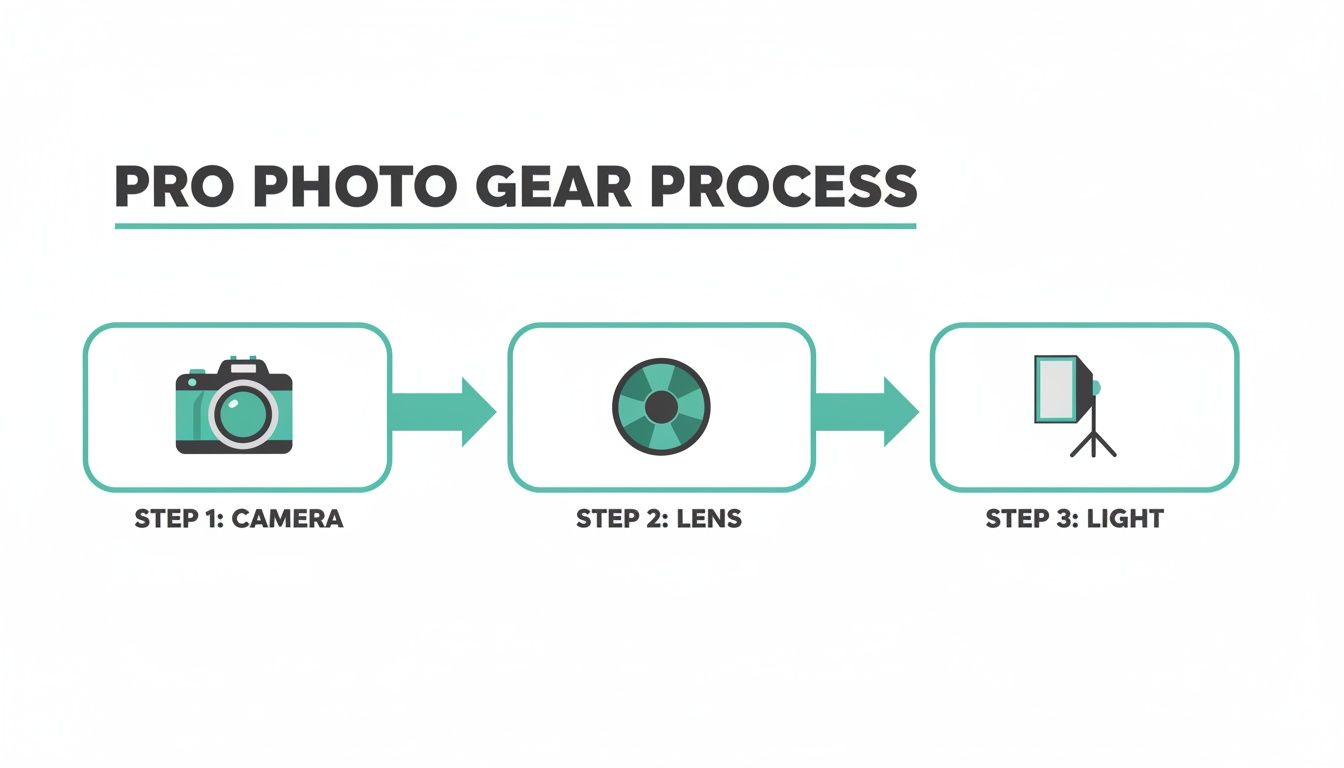
The right camera, lens, and lighting are the essential starting points. They allow the photographer to capture high-quality raw files that give them maximum flexibility in post-production.
You can expect to receive your photos in at least two formats:
- High-Resolution Files (TIFF or full-size JPEG): These are the big guns, meant for high-quality print materials like brochures, banners, and magazine ads where every pixel counts.
- Web-Ready Files (Optimized JPEG): These are smaller, compressed files perfect for websites, email campaigns, and social media, where fast loading times are crucial.
Finally, let’s talk about image licensing. This is a big one. When you hire a photographer, you’re not actually buying the photos themselves—you're purchasing a license to use them for specific, agreed-upon purposes. The photographer always retains the copyright. A standard license usually covers marketing the property for sale or lease, but it's absolutely vital to get these terms in writing to avoid any legal headaches later on.
How to Price and Package Photography Services
Figuring out the cost of commercial real estate photography can feel a bit like trying to hit a moving target. It’s a completely different world from residential shoots, which are often more standardized. Commercial projects come with so many variables that a simple, one-size-fits-all price list just doesn't work.
The goal here is to get a handle on the different ways photographers price their work and what factors drive that final number. When you understand how it all comes together, you can budget smarter, and photographers can give you a clear, competitive quote. It's all about making sure everyone is on the same page and the value delivered matches the project's goals.
Common Pricing Models in Commercial Photography
In the world of commercial photography, you’ll generally run into three main pricing structures. None of them is inherently "better" than the others; the right one simply depends on the specific job.
- Per-Photo or Per-Image Rates: This is as straightforward as it gets. You pay a set price for each finished photo. It’s a great fit for smaller jobs or when you only need a few knockout images for a specific purpose.
- Hourly or Day Rates: For bigger or more intricate properties, photographers often charge based on time. You’ll see half-day rates (usually around 4 hours) and full-day rates (around 8 hours). This covers the photographer's time on-site, including all the setup and execution.
- Project-Based Packages: This is hands-down the most popular model for full-scale commercial shoots. The photographer bundles everything into a single flat-rate quote. This package will clearly spell out all the deliverables, like a specific number of interior, exterior, and drone shots, maybe even a 3D tour.
Key Factors That Influence the Final Price
So, what actually goes into that final price tag for a commercial real estate photography project? It’s much more than just the number of pictures you get. Each of these elements adds time, complexity, and skill, all of which are reflected in the cost.
Here are the big ones to keep in mind:
- Property Size and Complexity: There's a world of difference between shooting a small retail storefront and a multi-story office building. More square footage, unique architectural details, and multiple common areas all take more time and effort.
- Specialized Services: When you add services like drone photography, twilight shoots, or a Matterport 3D tour, you're tapping into specialized gear and expertise. Naturally, that increases the investment.
- Post-Production Time: A photographer's work doesn't end when they pack up their camera. The time spent in the editing suite on tasks like advanced retouching, removing unwanted objects, or blending multiple exposures (HDR) is a major factor.
- Image Licensing and Usage: This is a big one. How you plan to use the images really matters. A license for a local MLS listing will cost less than one for a national advertising campaign that will run for years.
The demand for high-quality commercial visuals is skyrocketing. The global market for commercial photography is on track to hit $15.8 billion by 2025, a clear sign that businesses know they need incredible images to stand out. If you want to dive deeper into the nuts and bolts of cost, check out our guide on how to price real estate photography.
Sample Commercial Photography Packages
To give you a better feel for how this all comes together, let's look at a few examples. These sample packages show how services are often bundled to fit different types of properties. Think of these as a starting point, not a rigid menu.
Sample Commercial Photography Packages
| Property Type | Included Services | Typical Price Range |
|---|---|---|
| Small Retail Storefront | 10-15 Interior & Exterior Photos | $400 - $800 |
| Mid-Size Office Space | 20-30 Photos (Interior, Exterior), 2D Floor Plan | $800 - $1,500 |
| Large Industrial Warehouse | 25+ Photos, 10 Drone Photos, 1-Minute Video | $1,500 - $3,500+ |
| Luxury Hotel or Resort | 50+ Photos, Drone, Twilight Shots, Matterport Tour | $3,000 - $7,000+ |
At the end of the day, the best path forward is always to have a conversation and get a custom quote. A good professional photographer will listen to your needs and build a package designed to make your specific property look its absolute best.
Finding and Vetting the Right Photographer
Choosing a photographer for your commercial property isn't just about hiring a vendor. It’s about finding a creative partner who gets your marketing goals. The right pro doesn't just take pretty pictures—they create strategic assets that communicate value and get phones ringing for leases or sales. Your search needs to go deeper than a quick portfolio glance.
First things first: look for a specialist. A photographer who’s great at weddings or family portraits probably isn't the right fit here. They likely won't have the specific gear, like tilt-shift lenses for keeping building lines perfectly straight, or the experience to light up a massive warehouse. You want to see a portfolio filled with properties just like yours, whether it's industrial spaces, high-rise offices, or retail centers. That kind of focused experience is the best sign they know exactly what your project needs.
Key Vetting Criteria to Consider
Once you have a shortlist, it's time to dig in. A beautiful portfolio is just the start. You need to be sure they have the professional chops to handle your project smoothly and protect your investment.
Here's what you absolutely need to check:
- Relevant Experience: Does their past work look like your property? Ask them to show you examples of how their images helped market a similar asset.
- Technical Skills: Look for consistency. Are the vertical lines perfectly straight in every shot? Is the lighting even and natural-looking? Are the colors true to life? This shows they’ve mastered composition, lighting, and editing.
- Business Insurance: This is a deal-breaker. Make sure they carry liability insurance to cover any potential accidents on-site. It’s a basic sign of a true professional.
A photographer’s real value isn’t just in the quality of their images. It's in their ability to translate a property’s business potential into a compelling visual story. You're looking for a partner who thinks like a marketer.
Essential Questions to Ask a Photographer
Before you sign anything, get them on the phone. A real pro will be happy to answer your questions and will have clear, confident answers. This conversation is all about making sure you're on the same page.
Here’s your checklist:
- What's your process for a commercial shoot? You want to understand their entire workflow, from the initial walkthrough to the final file delivery.
- What's your typical turnaround time? This is crucial, especially when you're up against marketing deadlines.
- Can you explain your image licensing? Get crystal clear on how and where you can use the photos. Nailing this down now prevents legal headaches later.
- How do you handle tricky lighting situations? Their answer will tell you a lot about their technical expertise and how prepared they are.
Investing in a top-notch photographer is one of the smartest business decisions you can make. Great images can boost a property's perceived value by 39% and increase social media shares by an incredible 1,200%. When you look at the ROI, it's a no-brainer. You can explore more key real estate photography statistics that really drive this point home. Choosing the right partner is how you make sure you get every bit of that value.
Your Questions, Answered
If you're new to hiring a professional for commercial real estate photos, you probably have a few questions. That's completely normal. Let's walk through some of the most common things people ask so you know exactly what to expect.
How Long Will the Photoshoot Actually Take?
The time we spend on-site really depends on two things: the property's size and the services you need. For a simple shoot of a small retail space, we could be in and out in just 1-2 hours.
But if we're talking about a large office building that needs everything—interiors, exteriors, drone shots, and a full Matterport 3D tour—that's a different story. That could easily take up a full day, or sometimes even more. The best way to get a solid time estimate is to go over your shot list with the photographer beforehand.
When Will I Get My Final Photos?
After we wrap up on-site, you can typically expect your professionally edited images back within 24 to 72 hours. This gives us the time to go through everything, pick the absolute best shots, and make sure they look perfect for your marketing.
Keep in mind, if your project is more complex—say, it involves heavy-duty video editing or detailed retouching—it might take a bit longer. Always chat about the delivery timeline with your photographer before the shoot, especially if you have a hard deadline for a marketing launch.
It’s not just about taking great pictures; it’s about getting them to you when you need them. Clear communication on deadlines is a must. It keeps your campaign on track and ensures we’re all on the same page.
Who Actually Owns the Photos?
This is a really important one. By law, the photographer who takes the picture owns the copyright to that image. It's their creative work.
When you hire a photographer, what you're actually buying is a license to use those photos. This license will spell out exactly how and where you can use them—think online listings, print brochures, and other materials for that specific property's campaign. Getting this in writing is key to avoiding any copyright headaches down the road.
What Should I Do to Get the Property Ready?
Honestly, this is where you can make the biggest difference. A clean, well-prepared property lets the photographer focus on getting stunning shots instead of working around clutter.
Here’s a quick pre-shoot checklist to get you started:
- Deep Clean: Make sure every surface, from windows to floors, is sparkling.
- Declutter: Clear away personal items from desks, remove any distracting objects, and tidy up any warehouse or industrial areas.
- Let There Be Light: Flip on every light switch and open all the blinds. Great lighting is everything.
Ready to book a pro who knows commercial properties inside and out? PropPhoto is a marketplace designed to connect you with elite photographers and media experts nationwide. Find your perfect photographer on propphoto.com.

