
If you want to get real estate clients, you have to do more than just take good pictures. The secret is building a brand that solves an agent's biggest problems and then getting that brand in front of them, repeatedly. Before you ever send an email or pick up the phone, your portfolio and your service menu have to do the heavy lifting. They need to scream competence and reliability. This initial groundwork is what separates the photographers who are always scrambling for gigs from the ones who have a steady stream of agents calling them.
Building a Foundation That Attracts Real Estate Agents
Before you can go out and find clients, you have to build a business that clients want to find. This means you need to stop thinking of yourself as "just a photographer" and start acting like a visual marketing partner for real estate agents. Every part of your brand—from the photos you show to the prices you charge—needs to be carefully engineered to pull in the exact type of agent you want to work with.
The very first thing to do is completely reframe how you think about your portfolio. It’s not a scrapbook of your favorite shots. It's your silent salesperson, a carefully curated gallery built to answer an agent's most pressing, unspoken question: “Can you help me sell this house faster and for more money?”
Curate a Problem-Solving Portfolio
Your portfolio has to prove you understand the local real estate market, not just the technical side of photography. An agent listing a multi-million dollar waterfront estate has entirely different visual needs than one marketing a starter home in a new subdivision. Your portfolio needs to either show you can handle both, or that you're an absolute master in one specific niche.
Forget showing 100 decent photos. Pick your best 20-30 images that tell a complete story of a property. Then, organize your website gallery by property type or service so agents can immediately find examples that resonate with them.
- Luxury Listings: This is where you show off. Think dramatic twilight shots, stunning architectural details, and wide, sweeping drone photos.
- Standard Residential: The goal here is clean, bright, and airy. Show off interiors that feel spacious, welcoming, and move-in ready.
- Specialty Services: Got skills? Flaunt them. Create separate, dedicated galleries for your drone work, 3D Matterport tours, or cinematic video walkthroughs.
The idea is for a prospective agent to land on your site, see work that looks exactly like the properties they list, and think, "This is the person I need to hire." It’s a foundational step, and you can get a deeper look into the whole process in our guide on how to become a real estate photographer.
Design Service Packages That Sell Themselves
Nothing turns off a busy real estate agent faster than a confusing price list. Simply listing "15 photos for $X" doesn't communicate any real value. You need to package your services into clear, tiered offerings that solve specific problems and make the agent's decision incredibly simple.
This approach immediately positions you as a strategic partner, not just a vendor. You’re not selling photos; you’re selling a solution that gets a listing sold.
An agent's entire job revolves around attracting qualified buyers and closing deals as efficiently as possible. Your services have to plug directly into that goal. When you frame your packages around outcomes—like generating more tour requests or selling a home above asking price—you directly align your value with their definition of success.
A simple three-tiered structure works wonders:
- The Essentials Package: This is your go-to for standard listings or rental properties. Think 25 high-res photos covering the interior and exterior, delivered with a 24-hour turnaround.
- The Pro Package: This should be your most popular offering, priced and featured to be the obvious choice for most listings. It might include everything from the Essentials, plus a 2D floor plan and a handful of aerial drone shots.
- The Luxury Media Kit: Your all-in solution for high-end, marquee properties. This premium package could bundle everything from the Pro Package with a cinematic video tour, dedicated twilight photography, and a 3D virtual tour.
This kind of structure empowers an agent to easily match their investment to the property's value. The data backs this up, too. Homes with professional photography sell 32% faster, and adding aerial photos can slash time on market by another 68%. Even more compelling, listings that include video get a mind-boggling 403% more inquiries. Your packages aren't just selling visuals; they're selling results.
With a powerful portfolio and clear, value-driven packages, your business is primed for outreach. You're no longer just asking for work; you're offering a clear solution.
Essential Client Attraction Foundation Checklist
Before you start any outreach, running through this checklist ensures your core assets are ready to convert interested agents into paying clients.
| Component | Key Objective | Action Item Example |
|---|---|---|
| Problem-Solving Portfolio | Instantly show agents you can sell properties like theirs. | Create separate galleries for "Luxury Homes" and "Suburban Family Homes." |
| Tiered Service Packages | Simplify the buying decision and maximize value. | Define an "Essentials," "Pro," and "Luxury" package with clear deliverables. |
| Professional Website | Establish credibility and provide a clear call to action. | Ensure your "Book Now" or "Contact" button is visible on every page. |
| Brand Identity | Be memorable and convey professionalism. | Design a clean logo and use consistent branding across all platforms. |
This foundational work is non-negotiable. It’s what makes all the outreach and networking efforts that follow actually pay off.
Get Found: Mastering Local SEO and Your Online Footprint
You can have the most breathtaking portfolio in the world, but if local agents can't find you, it might as well not exist. In real estate, your online visibility isn't just a "nice to have"—it's everything.
Think about it. When a top producer in your city needs a photographer for a new luxury listing, what do they do? They pull out their phone and search "real estate photographer near me." Your goal is simple: be the first name they see.
This is where a smart local SEO strategy becomes your unfair advantage. It's about making Google see you as the go-to expert in your service area, not just another person with a camera.
Your Google Business Profile: The New Front Door
If you do only one thing for your local marketing, make it this. Your Google Business Profile (GBP) is the single most powerful tool for getting on an agent's radar. It's what puts you in that coveted "map pack" at the top of the search results and is often the very first impression of your business.
A neglected profile screams "amateur." An optimized one is a 24/7 client-generating machine.
To get it right, focus on these three things:
- Fill Out Everything: Don't skip a single field. List all your services (drone, 3D tours, twilight shots), define your exact service areas, and write a detailed business description. Sprinkle in keywords agents actually use, like "property photography" or "listing video services."
- Reviews Are Rocket Fuel: Positive reviews are the ultimate trust signal. Make it a non-negotiable part of your process to ask every single happy client for a review. A steady flow of five-star feedback tells both Google and future clients that you deliver the goods.
- Show Off Your Work (with Geo-tags): Constantly upload high-quality, geo-tagged photos from recent shoots. This not only keeps your profile fresh and visually appealing but also proves to Google that you're actively working in the neighborhoods you claim to serve.
Optimize Your Website to Speak the Agent's Language
While your GBP gets you found, your website is where you seal the deal. It needs to be optimized for the exact phrases agents are searching for. And trust me, they aren't typing in "artistic architectural imagery." They're searching for "real estate photographer in [Your City]."
Weave these high-intent, location-specific keywords throughout your site, especially on your homepage and service pages. A page title like "Premium Real Estate Photography in Boston, MA" will outperform a generic one every time. If you want to dive deeper, you can explore some of the common marketing mistakes for real estate photographers that often tank search rankings.
Your online presence is a direct reflection of your professionalism. Agents need a reliable partner who gets it. A polished Google profile and a keyword-focused website instantly show them you understand their business and are ready to help them win.
Be Seen Where Agents Are Already Looking
Don't just wait for agents to find your website. You need to show up where they are actively looking for talent. This is where niche marketplaces become your secret weapon.
Platforms like PropPhoto are built specifically to connect photographers and agents. Realtors can search by location and filter for specific needs, like "Matterport 3D tours in Denver" or "drone photography in Miami." A detailed, polished profile on a site like this is like setting up a booth at the biggest real estate conference in town—it puts you directly in the path of motivated buyers.
The reality is that 43% of home buyers start their search online, and for 41% of them, photos are the single most important feature. With an industry average conversion rate of just 4.7%, every single lead is critical. Your online discoverability isn't just a marketing tactic; it's a lifeline.
Forging Connections Through Strategic Outreach
Having a killer portfolio and a polished website is a fantastic start, but let's be real—they won't fill your calendar on their own. To really get the ball rolling, you have to move from a passive "build it and they will come" mindset to an active, strategic outreach game plan. This is how you land the kind of real estate clients who don't just hire you once, but become your biggest champions.
This isn’t about blasting every agent in your city with a generic "hire me" email. That's a one-way ticket to the spam folder. Real, effective outreach is about being a problem-solver first and a service provider second. It's about building genuine relationships before you ever talk about a booking.
Identify and Connect with Top Agents
First things first, you need to find the movers and shakers in your local market. Don't waste your time chasing agents who only close a handful of deals a year. You want to focus your energy on the top performers—the ones with a constant stream of listings, a killer social media presence, and professional branding that stands out.
Here’s how I find them:
- Scour Zillow and Realtor.com: I look for agents who dominate listings in the neighborhoods I want to work in. I pay close attention to their current photos. Is there a noticeable gap in quality that I can fill? That's my opening.
- Analyze Social Media: A quick search of local real estate hashtags on Instagram or Facebook reveals who's truly active. The best agents are constantly sharing new listings, market insights, and client testimonials.
- Good Old-Fashioned Driving: Seriously. Drive through the most desirable areas and look at the "For Sale" signs. You'll start seeing the same names over and over. Those are the people you need to know.
Once you have your shortlist, your outreach has to be personal and add value. A generic cold email is dead on arrival. A message that shows you've actually done your homework? That gets a reply.
Here's a snippet from an email that worked for me:
"Hi [Agent's Name], I just saw your beautiful new listing on Elm Street—the natural light in that home is incredible. I specialize in a bright, airy style that really makes spaces feel bigger. I shot a similar property just down the road last month, and I think you'll appreciate how it turned out. Here’s a quick link. Let me know if you’re ever looking for a fresh perspective."
This approach lands because it’s specific, it's complimentary, and it shows my expertise without being pushy. For more proven tactics, our complete guide on how to get real estate photography clients is packed with them.
Think Beyond the Agents: Expand Your Network
While agents are your bread and butter, they aren't the only professionals in town who need top-notch property photos. If you think laterally, you can build a diverse network of partners that creates multiple, consistent referral streams. These are the people who are already trusted by property owners and are often involved right before a listing goes live.
Consider building relationships with these high-value partners:
- Home Stagers: They pour their hearts into making a property look perfect for photos. They need a photographer who can do their work justice.
- Interior Designers: They’re always looking for professional shots of their finished projects to build their own portfolios and market their services.
- Property Managers: These pros are constantly updating rental listings for platforms like Airbnb, VRBO, and Zillow Rentals. Fresh, high-quality photos are a must.
- Custom Home Builders: They need absolutely stunning visuals to market their new constructions and attract high-end buyers.
When you connect with these professionals, you create a symbiotic relationship. You help them look good, and they send business your way. It's a win-win.
How to Choose Your Outreach Channel
Not all outreach methods are created equal. Cold calling might feel intimidating, while a social media DM can feel more casual. The key is to pick the channel that aligns with your personality and the person you're trying to reach. Here’s a quick breakdown to help you decide where to focus your energy.
Outreach Channel Effectiveness Comparison
| Channel | Best For | Pros | Cons |
|---|---|---|---|
| Reaching busy professionals with a detailed, value-packed message. | Allows for personalization, easy to track, non-intrusive. | Low open rates if not compelling, can easily be ignored. | |
| Phone Call | A direct, personal approach for high-priority targets. | Immediate connection, can build rapport quickly. | Can be seen as intrusive, easy to get gatekeepers. |
| Social Media DM | Connecting with socially active agents and designers in a casual way. | Informal, great for showing you follow their work. | Can get lost in the noise, may seem unprofessional if not done right. |
| In-Person | Building strong, memorable relationships at industry events. | Highest impact for rapport building, memorable. | Time-consuming, requires confidence and networking skills. |
Ultimately, the best strategy is often a mix of these. Start a conversation on Instagram, follow up with a thoughtful email, and solidify the connection at a local real estate event.
Cultivate Partnerships with Real Value
Building these relationships goes way beyond just swapping business cards at a networking lunch. It’s about finding creative ways to collaborate and provide mutual value that helps everyone grow.
Try starting a conversation with a home stager by offering a complimentary shoot for one of their projects. In exchange, you get to use the photos in your portfolio. This gives them professional images to market their services and gives you a powerful case study to show agents.
You could also team up on content. Partner with an interior designer to write a blog post on "How Professional Staging and Photography Can Add Thousands to a Home's Sale Price." You both share it with your networks, doubling your reach and positioning yourselves as the go-to experts in your market.
A simple referral program can also be a game-changer. Offer a 10% referral fee or a credit toward their next shoot for every new client they send your way who books with you. This small incentive can turn a casual connection into a powerful, business-generating partnership that keeps your calendar full of high-quality projects.
Creating an Unforgettable Client Experience
Landing a new agent is a win, but it’s just the first step. The real money in this business comes from turning that one-time shoot into a lasting partnership. In an industry built on relationships, the experience you provide is every bit as important as the photos you deliver.
Think about it from the agent's perspective. They're juggling listings, fielding calls from anxious sellers, and coordinating a dozen different vendors. Your process should be a breath of fresh air, not another headache. When you make their life easier, they'll keep coming back.
Every single interaction is a chance to build that trust. From their first email to you, to the day you deliver the final gallery, and even weeks after, you're either proving you're a pro or just another person with a camera.
Make Booking and Communication a Breeze
Your client experience starts the moment an agent decides to hire you. Is it easy for them to book your services? Or is it a mess of back-and-forth emails trying to nail down a time? A clunky process will send a busy agent running for the hills.
You want booking to be absolutely effortless. I can't stress this enough. Modern scheduling tools can plug right into your website, letting an agent see your availability and lock in a shoot in minutes. This single feature gets rid of the email tag game and instantly shows them you’re organized and professional.
Once they're on your calendar, clear communication is everything.
- Instant Confirmations: Set up an automated email that immediately confirms the date, time, location, and services they booked. Peace of mind is a powerful thing.
- Pre-Shoot Nudges: A friendly reminder sent 24-48 hours before the shoot is a lifesaver. It helps prevent no-shows and ensures the property is actually ready when you arrive.
- A Simple Checklist: This is my secret weapon. I provide a branded, downloadable "Home Prep Checklist" for the agent to give to their sellers. It adds a ton of value, makes them look good, and helps you get much better shots.
These small, automated touches show you respect the agent’s time and have your act together. It sets a professional tone right from the start.
Deliver Like a True Professional
How you hand over the final images is your last chance to make a great impression, yet so many photographers drop the ball here. Attaching a zip file to a bland email works, I guess, but it does absolutely nothing to reinforce your brand or wow your client. Your delivery is your final handshake—make it a firm one.
Using a secure, branded online gallery is the industry standard for a reason. It creates a polished, high-end experience that actually makes the agent’s job easier. I recommend a platform like PropPhoto that gives you:
- Branded Galleries: Your logo, your colors. It’s a constant, subtle reminder of who took these amazing photos.
- Multiple Download Sizes: This is non-negotiable. They need one-click access to high-res print files and web-optimized MLS sizes.
- Easy Sharing: The agent should be able to fire off the gallery link to their team, their clients, or their stager without a second thought.
A professional delivery isn't just about sending files; it's about providing a tool. When your gallery makes it simple for an agent to get what they need, you become an indispensable part of their marketing workflow.
Master the Art of the Follow-Up
Your job isn't done when you hit "send" on the gallery link. The follow-up is where you cement the relationship and turn one client into ten through referrals. This doesn't mean being pushy. It’s about showing you’re invested in their success.
A few days after delivery, send a quick, personal email. "Hey, just wanted to make sure you got the photos and everything looks great. Let me know if you need anything at all!" This simple check-in invites feedback and shows you stand by your work.
Then, about a month later, touch base again. If you see the property sold, send a note congratulating them. It’s a perfect, low-pressure way to remind them you're ready for their next listing. You could even sweeten the deal with a small 10% discount on their next shoot as a thank-you. This approach builds massive goodwill and makes you the obvious and only choice for their future projects.
Your First 90 Days: A Practical Action Plan
All the ideas we’ve covered are great, but theory doesn't pay the bills. Action does. This is where we turn all that strategy into a tangible, week-by-week roadmap for getting clients.
Think of the next 90 days as a series of focused sprints. This approach breaks the huge task of building a client base into manageable chunks, helping you build momentum without getting overwhelmed. We’ll start with a rock-solid foundation and then layer on outreach and systems, so you always know exactly what you should be doing to move the needle.
Days 1-30: Laying the Groundwork
Your first month is all about getting your own house in order. Before you even think about emailing a single agent, you need to build the assets that will do the selling for you. It can be tempting to jump straight into outreach, but hold off until your portfolio and online presence are sharp, professional, and ready to turn a curious glance into a confirmed booking.
This foundational phase is non-negotiable. It’s what makes an agent who stumbles upon your work think, "Wow, this person gets it."
Here's your to-do list for the first 30 days:
- Curate a Killer Portfolio: Go through your existing work with a brutally honest eye. You need to select only your absolute best 20-30 images—the ones that scream the style you want to be known for. If you’re short on luxury or twilight shots, go get them. Do a few spec shoots if you have to. Your portfolio needs to reflect the work you want to attract.
- Set Up Your Online Hubs: Get your Google Business Profile completely dialed in. That means filling out every section, adding all your services, defining your exact service area, and uploading at least 10 high-quality, geo-tagged photos. At the same time, build out a standout profile on a marketplace like PropPhoto, where agents are actively searching for photographers.
- Nail Down Your Packages: Finalize your service packages and pricing. Write clear, benefit-driven descriptions for each tier. When an agent asks for your rates, you need to respond quickly and confidently, and this preparation is key.
By the end of this month, you won't just have a nice website. You'll have a conversion machine. Any agent landing on your profile will see a polished, trustworthy professional they want to hire.
Days 31-60: Active Outreach and Visibility
Okay, foundation's set. Month two is when you flip the switch from preparation to active engagement. It’s time to get your polished brand in front of the right agents. The goal here isn't to spam everyone in a 50-mile radius; it's about making targeted, meaningful connections.
This is your visibility phase, where you’ll mix smart digital marketing with a little old-school networking.
Your action items for this 30-day block:
- Start Your Local SEO Push: Get into a consistent content rhythm. Write one simple blog post targeting a local keyword (like "Why Professional Photos Sell [Your Town] Homes Faster"). Also, make at least two posts a week on your Google Business Profile showcasing recent work or sharing a tip.
- Build and Work Your Target List: Do your homework. Create a spreadsheet of 20-25 top-performing local agents whose current listing photos could be a lot better. Don't just cold email them. Start by genuinely engaging with their posts on social media for a week or two, then reach out with a personalized, value-first message.
- Go to One Industry Event: Find a local real estate mixer, a brokerage open house for agents, or even a meeting for home stagers. The goal isn't to hand out 50 business cards. It's to have 2-3 real conversations with people who could become clients or referral partners.
As you start making contact, it helps to visualize the journey you're guiding clients through.
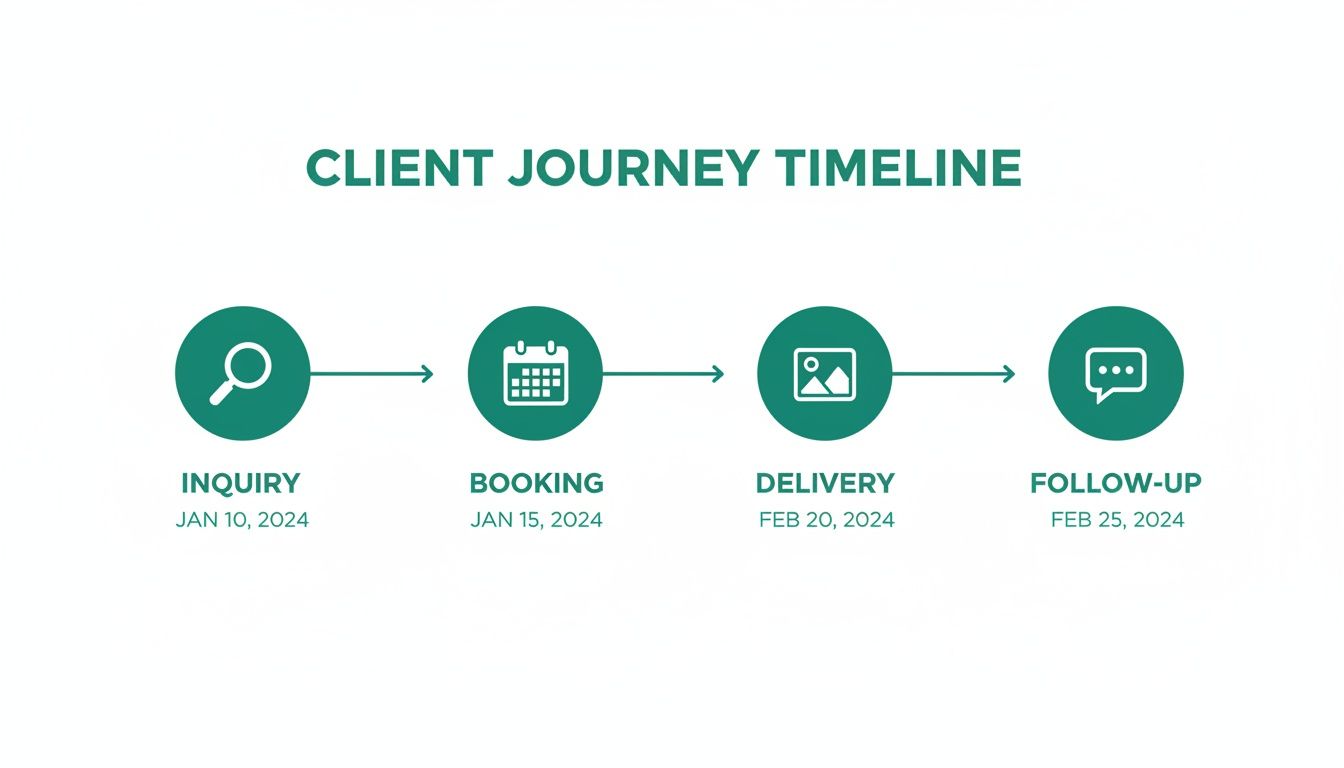
Understanding these stages helps you anticipate an agent’s needs and deliver a smooth, professional experience that gets you hired again.
Days 61-90: Building Systems and Momentum
The final 30 days are about turning your early wins into repeatable systems that create long-term momentum. You’ve laid the groundwork and started the conversations; now it's time to refine your process, follow up like a pro, and figure out what’s actually working. This is how you go from landing one-off gigs to building a steady pipeline of clients.
Here’s where you should focus:
- Systemize Your Follow-Up: Stop writing every email from scratch. Create templates for booking confirmations, pre-shoot reminders, gallery delivery notifications, and a simple check-in a week after the job. A system ensures no one falls through the cracks and makes you look incredibly organized.
- Hunt for Social Proof: For every new client you shoot for, make it a priority to ask for a review. We know 88% of buyers would recommend their agent, but that doesn't mean they'll think to leave a review for you. A glowing testimonial on your Google profile is pure marketing gold.
- Analyze and Adjust: At the end of the 90 days, look at your results. Which email subject line got the most opens? Did you get more leads from Instagram or a networking event? Which service package is the most popular? Use that data to fine-tune your strategy for the next 90 days.
Frequently Asked Questions
Jumping into real estate photography can feel like a lot at once. You've got questions, and that's a good thing—it means you're thinking like a pro. Let's tackle some of the most common hurdles photographers face when they're trying to land their first real estate clients.
How Should I Price My Services When I'm Just Starting Out?
Figuring out what to charge is probably the biggest headache for anyone new to the game. The temptation is to go low—really low—just to get your foot in the door. But trust me, that's a trap. Slashing prices might land you a gig or two, but it devalues your work from day one and tends to attract clients who will always chase the cheapest option.
Instead of racing to the bottom, think about value. A great first step is to do a little recon and see what the established pros in your area are charging. This isn't about copying them, but about getting a feel for the market's baseline.
From there, build a few simple packages. Agents are busy people; they love it when you make their lives easier. You could have a starter package with a solid set of professional photos, then offer add-ons like drone shots, a video tour, or virtual staging.
Your price tag says a lot about your work before an agent ever sees a photo. You want to be competitive, sure, but never aim to be the cheapest. The best agents know that great photography is an investment that sells homes faster, and they're willing to pay for that quality.
What's the Must-Have Gear to Get Started?
You don't need a truckload of gear to get going, but there are a few non-negotiable pieces you absolutely need to deliver the results agents expect. We're talking sharp, bright, wide photos that make a home look incredible online.
Here’s the essential kit I wouldn't leave home without:
- A DSLR or Mirrorless Camera: Something that lets you shoot in full manual mode is key. You need to be in complete control.
- A Wide-Angle Lens: A lens somewhere in the 16-35mm range is the industry standard. It's what lets you capture an entire room without making it look warped or distorted.
- A Sturdy Tripod: This is non-negotiable. It’s the secret to getting those perfectly sharp, level shots and is crucial for techniques like bracketed exposures for HDR.
- Off-Camera Flash: An external flash (or two) is a lifesaver for balancing light in dim rooms and ensuring every interior shot is bright and consistent.
Down the road, you can always add more tools to your arsenal, like a drone, a 3D camera for virtual tours, or a gimbal for silky-smooth video.
How Can I Stand Out in a Competitive Market?
Let's be real: there are a lot of photographers out there. Just being good with a camera isn't enough to get noticed anymore. The real secret to standing out is to build a brand around a specialty.
Don't try to be the jack-of-all-trades. Instead, become the go-to person for something. Maybe you're the drone expert who captures breathtaking aerials. Perhaps you specialize in those stunning twilight shots for luxury properties. Or maybe your unique selling point is an unbeatable 24-hour turnaround time.
Pick your niche, shout about it from the rooftops in your marketing, and then deliver an experience that makes agents say "wow." It’s worth remembering that 88% of homebuyers say they'd recommend their agent. You want agents to feel that exact same way about you. When you deliver amazing service and stunning photos, they won't just hire you again—they'll become your biggest advocates.
Ready to put yourself in front of local agents who are actively looking for your skills? Build your free profile on PropPhoto and let high-quality clients come to you.

